Country Balls: World War
MAD PIXEL GAMES LTDStrategy
4.62.61K Reviews
- Version
- 0.4.23
- Installs
- 10.00M
- Age Rating
- Teen
Screenshots
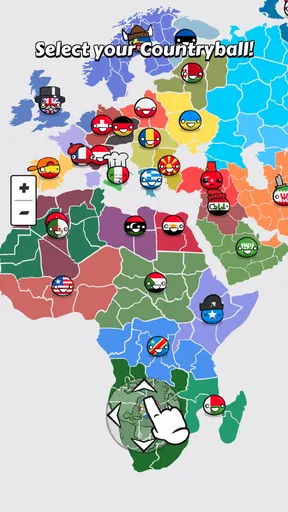
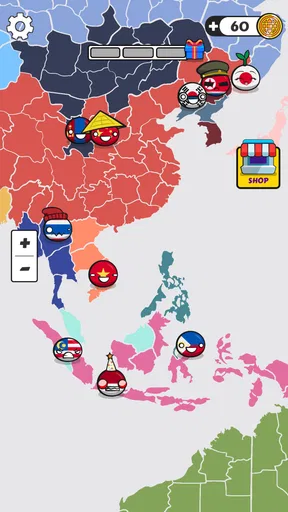
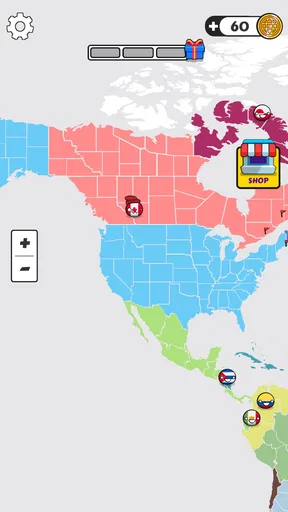
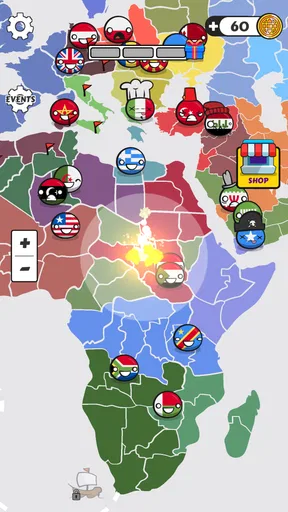
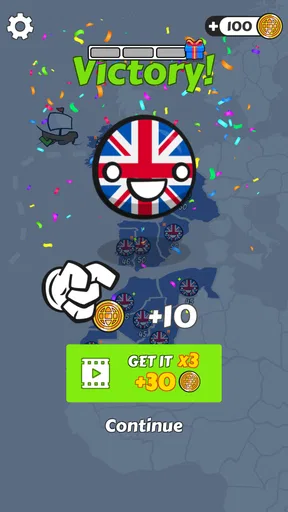
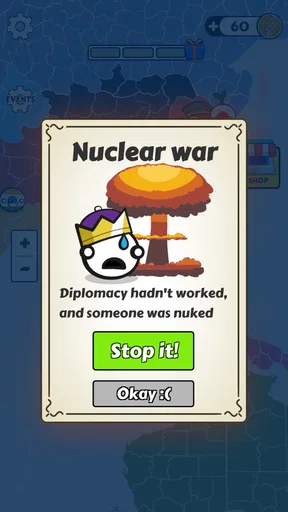
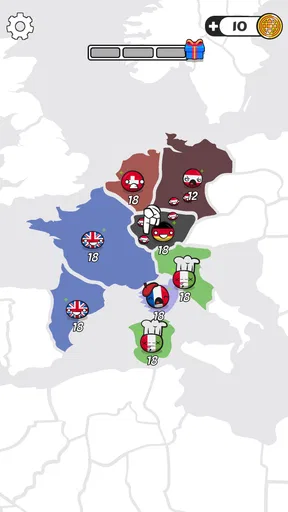
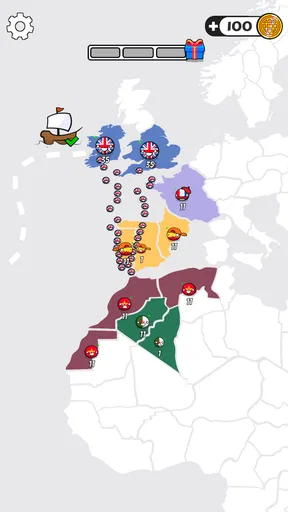
Our Review of Country Balls: World War
 Analysis by Appyee
I approached Country Balls: World War as a quick strategy game rather than a traditional, long-form war simulator. Its appeal is easy to understand: you control an army, make decisions under pressure, and try to win through planning instead of simply tapping as fast as possible. After spending time with it, I found that the main question is not whether it looks approachable—it does—but whether its compact style matches the kind of strategic experience you want on a phone.
The game comes from MAD PIXEL GAMES LTD and is free to download, with optional purchases priced from $2.99 to $4.99 per item. It is listed for Teen audiences, runs on devices using Android 7.1 or later, and currently appears as version 0.4.23. Those details matter because this is best treated as a casual-to-moderate strategy game for short sessions, not as a replacement for a deep PC-style campaign.
What to consider before choosing it
My first decision criterion is how much thinking you want between battles. The central idea is straightforward: guide your forces, read the situation, and use logic to make the better move. That makes the game easier to approach than many strategy titles filled with menus, technology trees, diplomacy screens, and long tutorials. If you enjoy making a plan quickly and seeing whether it works, the format is inviting.
The trade-off is that accessibility can reduce depth. A player searching for detailed logistics, realistic military history, or a huge number of interconnected systems may find the experience lighter than expected. I would place it closer to a mobile battle-planning game than to a full grand-strategy simulation. That is not a flaw by itself; it simply defines who will get the most from it.
The second criterion is session length. This is the sort of game I can imagine opening while waiting for an appointment or taking a short break. It does not demand that I reserve an entire evening before starting. That makes the game more practical than many strategy alternatives that punish interruptions or require careful attention for a long stretch.
There is also a useful distinction between “easy to start” and “easy to master.” The basic objective is clear, but winning consistently still depends on observing the battlefield instead of making the first obvious move. I found that the best results came from pausing mentally before committing resources or sending units forward. In other words, the game rewards restraint more than frantic input.
For a realistic everyday example, imagine playing during a commute with only a few minutes available. I would use that time to attempt a battle, identify the mistake that cost me the previous attempt, and adjust my opening decision. That loop feels more satisfying than mindlessly repeating the same action, especially when a small change in timing or positioning produces a better result.
Why the country-ball presentation helps
The country-ball theme gives the game a recognizable visual identity without requiring a serious military tone. It makes the subject feel playful and lowers the barrier for people who might normally avoid war-themed strategy games. I also think the simplified characters help keep attention on the decisions rather than on visual realism.
That style will not suit everyone. If you want a historically grounded atmosphere, authentic equipment, or a serious campaign narrative, the cartoon presentation may feel too light. I would not choose this game for realism. I would choose it for a more relaxed interpretation of battlefield decision-making, where the theme adds personality instead of trying to recreate a textbook conflict.
Where it earns its place among mobile strategy games
The strongest part of the experience is the balance between immediate understanding and room for judgment. I do not need to study a manual to grasp the basic purpose of a battle, yet I still have reasons to think before acting. That combination is valuable on mobile, where complicated interfaces can make a good strategy game feel like work.
Another strength is its clear identity. Many mobile strategy games lean heavily on fantasy kingdoms, futuristic armies, or collectible characters. Country Balls: World War takes a different route with its country-ball framing and battle-focused premise. If that visual language appeals to you, it gives the game more character than a generic army management screen.
The game is also a sensible choice for players who want strategy without committing to a large ongoing hobby. I can recommend it to someone who enjoys logic puzzles, tactical board games, or short decision-based challenges but does not want to memorize a complicated economy. It offers a more active experience than a simple puzzle while remaining less demanding than a full-scale war simulator.
Its public reception suggests that this approach connects with a large audience: it has an average rating of 4.6 from around 218 thousand ratings, and it has passed 10 million installs. I would not treat popularity as proof that every player will enjoy it, but those figures do support the idea that the basic formula is accessible and easy to pick up.
Small decisions that make a noticeable difference
One practical habit improved my results: I stopped treating every available action as something that needed to happen immediately. Early moves often shape the rest of a battle, so I found it more useful to look for the safest way to preserve momentum rather than chase a flashy opportunity. This is especially helpful when the opposing force appears weaker and tempts you into overextending.
A second tip is to use failed attempts as information instead of simply replaying them with faster taps. When a plan falls apart, I ask whether the problem was poor timing, an exposed position, or an assumption about the enemy. That approach turns the game into a compact logic exercise. It also prevents the common mobile-game habit of repeating the same sequence and hoping the result changes.
A third insight is that the game works better when I treat each battle as a problem with priorities, not as a race to use every option. Protecting the part of the army that enables the next move can be more valuable than gaining a small immediate advantage. Players familiar with board-game tactics will probably recognize this kind of trade-off, while newcomers may need a few attempts before it becomes natural.
I also recommend playing with a clear stopping point. Because the battles are easy to approach, it is tempting to continue after a frustrating loss. In my experience, one or two thoughtful retries are more productive than a long string of automatic rematches. The game rewards attention, and attention drops quickly when I am playing only to erase a disappointing result.
Where competing categories may fit better
The most obvious alternative is a deeper strategy game with more systems and a longer campaign structure. That type of game is better for someone who enjoys planning economies, managing several fronts, and watching decisions unfold over hours or days. Country Balls: World War is the better fit when I want the strategic core without that much administrative weight.
Turn-based tactics games may also be preferable for players who want every move to feel deliberate and fully measured. Their slower rhythm can provide more room to study a map and calculate consequences. Here, the appeal is greater immediacy. I can make a plan quickly and respond to what happens, but that also means the experience may feel less methodical to someone who wants near-perfect control.
Real-time strategy games offer another different path. They usually create more pressure through simultaneous movement and rapid reactions. If your favorite part of strategy is multitasking across several locations, a larger real-time game may satisfy you more. This title is more suitable when you prefer a focused battlefield and manageable decisions rather than constant monitoring.
There is also a place for pure puzzle games. If you want the cleanest possible logic challenge with no army theme, a dedicated puzzle title may be more elegant. The advantage here is that the strategic decisions have a stronger sense of conflict and progression. The disadvantage is that players who dislike military framing, even in a playful style, may not connect with it.
I would skip this game if you are specifically looking for historical accuracy, a rich narrative, or a highly detailed simulation. I would also be cautious if you dislike optional purchases in free games. The individual items cost between $2.99 and $4.99, so the download is easy to try, but players who prefer a single upfront purchase may feel more comfortable with a premium strategy game instead.
What the free model means in practice
The free entry point makes trying the game straightforward. I can install it without first deciding whether a larger purchase is worthwhile, which is useful when I am unsure about the country-ball style or the battle format. The optional purchase range is moderate on an individual-item basis, but repeated spending can still change the overall cost if I am not careful.
My advice is to decide in advance whether you are treating the game as a free short-session pastime or as a title you are willing to support financially. That simple boundary prevents the usual problem of making several small purchases without noticing the total. If you are comfortable playing within the free experience, the game is easier to evaluate on its own strategic merits.
The cost of switching to another strategy game depends on what you value. Moving to a deeper title may mean learning a more complicated interface and accepting longer sessions. Moving to a puzzle game may make the rules cleaner but remove the army-based context. Moving to a premium game may reduce purchase uncertainty but require more commitment before you know whether the style suits you.
For me, the low switching cost is one of this game's practical advantages. I do not need to rebuild my entire gaming routine around it. I can use it as a compact strategy option alongside other games, especially when I want something more thoughtful than an arcade distraction but less involved than a campaign-heavy simulation.
Who should install it
I recommend Country Balls: World War to players who want approachable mobile strategy, enjoy learning from failed attempts, and like the humorous country-ball presentation. It is particularly suitable for someone who wants battles that can fit into ordinary spare moments rather than a game that demands a long, uninterrupted session.
It is also a good starting point for a newcomer to strategy games. The theme is less intimidating than a realistic military simulator, and the core objective is easy to understand. A new player can focus on observing patterns, making a decision, and adjusting the next attempt instead of first learning a large collection of specialized terms.
Experienced strategy players may still enjoy it as a lighter side game, but expectations are important. If your enjoyment comes from extensive customization, complex alliances, or detailed campaign planning, you may outgrow the format. I would keep a deeper alternative available rather than expecting this one title to provide every kind of strategic challenge.
The Teen content rating is another reason I would present it as a game for older children and adults rather than as a universal family title. Parents should consider whether the battle theme and the game's purchase options fit their household before handing over a device.
My recommendation after weighing the trade-offs
My final view is positive, with a clear condition: choose this game for its compact, playful strategy, not for realism or grand-scale simulation. The best moments come from recognizing that a battle is a logic problem, resisting an impulsive move, and seeing a revised plan work. That is a satisfying loop when I have only a short amount of time.
The limitations are equally clear. The cartoon theme can be a mismatch for players seeking seriousness, the strategic scope may feel modest beside deeper alternatives, and optional purchases require personal spending discipline. None of those points cancels out the game's strengths, but they should shape your expectations before you install it.
With its 4.6 average, broad install base, free price, and current version 0.4.23, it is an easy recommendation to try for fans of accessible strategy. I would start without buying anything, play several battles with deliberate pauses between decisions, and then ask whether the core planning loop remains enjoyable. If the answer is yes, this is a useful mobile companion. If you want a more demanding simulation, a slower tactical system, or a purchase-free experience, another category will probably serve you better.
My honest recommendation: install it if you want quick strategic battles with personality, but skip it when depth, realism, or a one-time payment matters more than convenience.
Verdict
Strengths of Country Balls: World War
- Simple controls make it easy for new players to get started.
- Large country selection offers plenty of variety for different play styles.
- Short battles work well for quick gaming sessions.
- The humorous country-ball theme gives the game a distinctive personality.
- Playable offline, making it convenient when an internet connection is unavailable.
Limitations of Country Balls: World War
- Some missions can feel repetitive after extended play.
- Progress may slow down without upgrades or additional resources.
- The cartoon visuals may not appeal to players seeking realistic strategy.
- Difficulty balance can be uneven between stages.
- Ads may interrupt gameplay, especially between completed levels.
Other Releases by MAD PIXEL GAMES LTD
View All
Country Balls: World Battle
Strategy4.7
Similar Picks in This Category
View All
Clash of Clans
Supercell4.5

Plants vs. Zombies™
ELECTRONIC ARTS3.7

Lords Mobile: Kingdom Wars
IGG.COM4.5

Clash Royale
Supercell4.4

State.io — Conquer the World
CASUAL AZUR GAMES4.1

Car Driving School : Car Games
Spark Game Studios3.9
Frequently Asked Questions
What is Country Balls: World War about?
Country Balls: World War is a strategy and battle game built around humorous country-ball characters. You assemble a team, improve your units, and fight through different stages and opponents. Although the presentation is cartoon-like and playful, the game still requires tactical decisions, including choosing suitable units, managing upgrades, and adapting your formation to the enemies you face.
Is Country Balls: World War free to download and play?
The game is generally available as a free download, allowing players to begin without paying an upfront purchase price. However, free-to-play games commonly include optional in-app purchases for currency, upgrades, boosts, or other advantages. Progress can usually be made without spending money, but players who want faster development may encounter offers designed to accelerate upgrades or unlock additional content.
Does Country Balls: World War require an internet connection?
An internet connection may be needed for certain features, such as loading advertisements, synchronizing progress, receiving events, or using online services. Some parts of the game may remain accessible offline, but this can depend on the version and device. For the most reliable experience, especially when saving progress or collecting online rewards, it is best to play while connected to the internet.
Is Country Balls: World War suitable for children?
Country Balls: World War uses colorful cartoon graphics and exaggerated representations of countries, making it less visually intense than a realistic war game. Nevertheless, it is still centered on battles, attacks, and military conflict. Parents should check the age rating, advertising content, chat or social features if available, and in-app purchase settings before allowing younger children to play without supervision.
What should new players know before starting Country Balls: World War?
New players should expect a progression-focused experience in which upgrading characters and using resources efficiently are important. It is usually better to improve a balanced group of useful units rather than spending everything immediately on one character. Completing missions, claiming daily rewards, and checking limited-time activities can also help strengthen your team without relying entirely on paid purchases.
Play our best games!


